
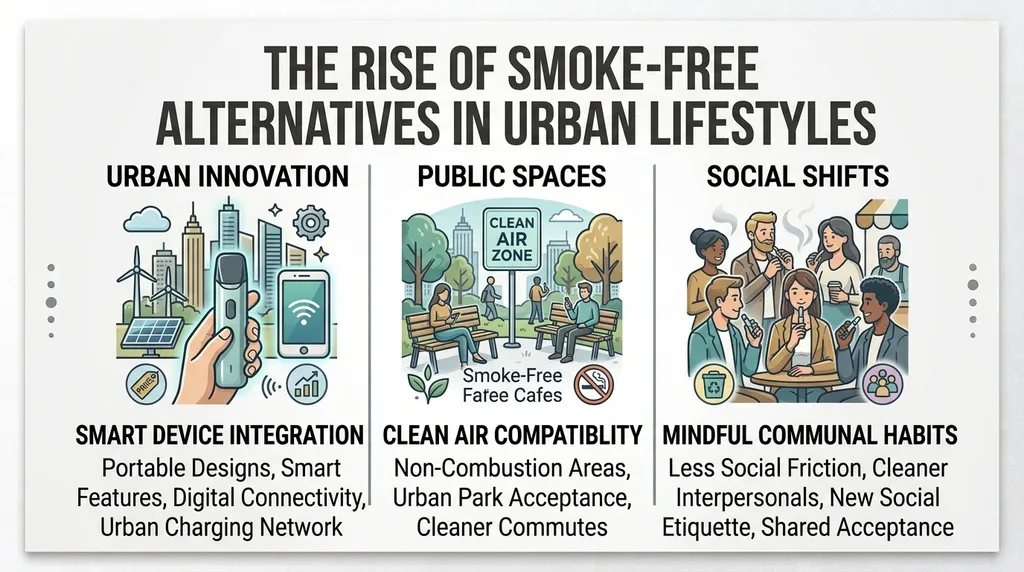
Walk through any major city today and you will notice something different. Fewer people are lighting up cigarettes on street corners. More are holding sleek, compact devices that produce little to no visible smoke. This shift is not accidental. It reflects a bigger change in how urban residents think about their health, their neighbors, and the air they share.
Cities are crowded. Apartments sit close together. Offices pack hundreds of people into shared spaces. In this kind of environment, the effects of traditional smoking spread far beyond the smoker. Passive smoke, also called secondhand smoke, drifts into hallways, balconies, and open windows. It settles into fabric and lingers in enclosed spaces long after a cigarette is finished. For people living in tight urban quarters, this has become a daily concern, not just a health statistic.
Why Urban Living Is Driving the Shift
City life comes with its own set of pressures. Long commutes, constant screen time, and packed schedules leave little room for anything that adds friction to daily routines. Traditional cigarettes bring smell, ash, and smoke that cling to clothes and furniture. In shared living spaces, this becomes a source of tension between neighbors, roommates, and family members.
Smoke-free alternatives have emerged as a practical response to this reality. These products are designed to reduce the amount of smoke released into shared air, which in turn lowers the exposure that people nearby experience. For someone living in a high-rise apartment or a small flat with thin walls, this difference matters. It is not just about personal preference. It is about coexisting comfortably with the people around you.
There is also a cultural angle to this change. Younger urban populations, in particular, are more aware of environmental and health data than previous generations. They read labels, compare products, and pay attention to what goes into the air they breathe. This awareness has pushed demand toward options that align with a cleaner, more considerate way of living in dense communities.
The Global Trend Toward Smoke-Free Cities
This movement is not limited to one country or one culture. Across major global cities, smoke-free products have moved from niche curiosity to mainstream habit. Public health campaigns, workplace policies, and even hospitality standards have adjusted to reflect this new normal. Restaurants, hotels, and office buildings increasingly favor smoke-free environments, and residents have adapted accordingly.
Dubai stands out as one of the clearest examples of this trend in action. As a city built on modern infrastructure and a fast-paced international lifestyle, it has become a hub where smoke-free products are widely available and increasingly normalized. The rise of brands like Terea Dubai reflects how quickly this category has grown in response to consumer demand. Residents and visitors alike are drawn to options that fit into a modern, image-conscious city where cleanliness and convenience are part of everyday expectations.
What makes this trend interesting is how it mirrors broader shifts happening in other global hubs, from Singapore to parts of Europe. Cities that prioritize air quality, urban wellness, and modern public spaces tend to see faster adoption of smoke-free products. It is less about a single product and more about a lifestyle shift that fits naturally into how modern cities function.
Reducing Passive Smoke Exposure in Shared Spaces
One of the strongest arguments in favor of smoke-free alternatives is their impact on the people around the user, not just the user themselves. Passive smoke exposure has long been linked to discomfort and health concerns for non-smokers who spend time near smokers, whether at home, at work, or in public spaces.
Smoke-free alternatives work differently from traditional cigarettes. Instead of burning tobacco, many of these products heat it, which significantly reduces the amount of smoke and odor released into the surrounding air. This does not mean the products are without any effect, since they still contain nicotine and are intended for adult users who already consume nicotine products. However, for people concerned about the impact of secondhand exposure in tight urban environments, this shift toward lower-smoke options is a meaningful part of the conversation.
Shared elevators, thin apartment walls, small balconies, and communal outdoor seating are all part of daily urban life. In these spaces, even a small reduction in ambient smoke can make a noticeable difference in comfort for everyone nearby. This is one reason why so many city dwellers have started paying closer attention to how their choices affect shared air quality.
Convenience Matters in a Fast-Paced City Life
Beyond health and environmental considerations, convenience plays a huge role in why urban residents are drawn to smoke-free alternatives. City life does not leave much room for extra errands. Between work, family responsibilities, and social commitments, finding time to visit a physical store can feel like an unnecessary hassle.
This is where digital convenience becomes a major factor. Busy professionals want products that are easy to find, easy to compare, and easy to order without disrupting their schedule. Online platforms have adapted to this need by offering a smooth shopping experience for smoke-free products, allowing people to browse options, check details, and complete their purchase from a phone or laptop.
For many urban consumers, being able to search for a reliable option to terea buy online removes the friction that once came with tracking down specific products across different stores. Instead of spending time driving around the city, checking store to store, people can place an order during a lunch break or after a long workday and have it handled without added stress. This kind of convenience is a defining feature of modern urban consumer habits, not just for smoke-free products but for nearly every category of daily life.
A Lifestyle Shift, Not Just a Product Trend
It would be easy to view this movement as simply a change in what people smoke. But the reality runs deeper. It reflects how urban populations are rethinking their relationship with shared spaces, air quality, and consideration for the people around them. It also reflects how digital convenience has reshaped the way people shop for almost everything, including personal lifestyle products.
As cities continue to grow denser and more interconnected, the demand for smoke-free options will likely keep expanding. People want solutions that fit into fast-paced routines while minimizing the impact on those nearby. Whether it is choosing a product with less visible smoke or simply valuing the ease of ordering online, these choices are becoming part of what it means to live thoughtfully in a modern city.
Ultimately, the rise of smoke-free alternatives says less about a single trend and more about how urban life itself is evolving. As awareness grows and convenience improves, this shift is likely to become an even more permanent part of city living around the world.
Note: Smoke-free and heated tobacco products still contain nicotine, which is addictive, and are intended for adult users. They are not risk-free and are not a certified method for quitting smoking.